

Law in the Face of the Changing Problems of the World
A timely reminder of the realities to which contemporary law is now called upon to respond is captured in the theme “Law in the Face of the Changing Problems of the World.” For generations, it has been hardly deniable that law has provided legal certainty through predictability, has moved toward justice in pursuit of an ideal of law, and has served the function of coordinating social life. As we live today—and move into the future that lies ahead—law is increasingly called upon to undertake the task of reformulation through deeper reflection and more rigorous deliberation than ever before, in the face of shifting international dynamics, unprecedented environmental crises, the rapid evolution of artificial intelligence, and more. To meet these challenges, maintaining an awareness of social realities while simultaneously engaging in profound reflection on the ideal dimensions of law will be crucial.
At IVR 2026 in Istanbul, we will share the responsibility not only for exploring “Law in the Face of the Changing Problems of the World,” but also for sustaining our ongoing academic discourse in the agora of this IVR community. I believe that IVR 2026 will provide a space in which we can engage in communicative processes that allow us to delve into philosophical insight amid the rapidly changing dynamics of contemporary society. I hope that our conversations here will open pathways for imagining how law might continue to evolve in ways commensurate with our shared human aspirations.
Jin-Sook Yun, President of IVR
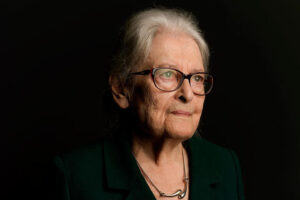
The theme “Law in the Face of the Changing Problems of the World” draws our attention to the shifting realities to which contemporary law is increasingly called upon to respond. In such a time, what is tested is not only the scope of law, but also the clarity of our understanding of the human being and of the requirements that follow from human dignity.
Justice is the demand that people’s fundamental rights, as well as their other rights, be protected, and that what these rights require under existing conditions be continuously carried out at the level of each nation and internationally. When defined in this way, justice appears as a higher-order principle: at every historical moment, by looking at the actual conditions, to derive –in the light of knowledge of human rights– the principles that determine the organization of social, economic, and political relations, and the norms concerning how persons will be treated in the public sphere; in other words, to derive the law.
Thus, justice demands the continual creation of diverse and changing conditions –conducive to, or at least not obstructive of, the development of persons and of the human species– and therefore demands that law be formed in a way that secures the protection of human rights at both the national and the global levels. For human rights express the general conditions under which human potentialities can be actualized: the conditions in which what is owed to persons as human beings can be given to them, and in which they, as human beings, can in turn give what they owe to other persons.
What justice demands is not, as theories of justice often suppose, that certain determinate, substantive principles be made effective; rather, what it demands is a determinate act of willing: the will to continuously develop a chain of conditions that constitutes diverse and changeable orders, yet orders of a determinate kind –orders formed on the basis of human rights. This is what “law must be grounded in justice” means: that laws at every level must be based, directly and indirectly, on clearly understood human rights.
May IVR 2026 in Istanbul provide an occasion for sustained reflection on how law, amid the changing problems of our world, can be derived from and assessed by this demand.
The Philosophical Society of Türkiye
İoanna Kuçuradi, The President of the Philosophical Society of Türkiye

Dear esteemed colleagues and guests,
It is a great pleasure to welcome you to the 32nd World Congress of the International Association for the Philosophy of Law and Social Philosophy (IVR 2026), for the first time in Turkey, Istanbul, at Kadir Has University. We are very honoured to host and be part of this Congress, which gathers scholars worldwide who continue to bring critical reflections on law and global society.
On this occasion of this Congress, we come together in 2026 with the intention of reflecting on the present and addressing the urgent challenges of our time. Ours is an era and a landscape marked by the persistence of systematic inequalities, the escalation of human rights violations, political uncertainty, wars, and hostile borders, as well as by technological transformation and deepening ecological crisis.
In this context, instead of reaffirming current legal principles and standards, our attention turns to the possibilities and limits they carry, to the sociopolitical effects of law. The Congress, in this sense, opens a space for renewed reflection on our legal tools “in the face of the changing problems of the world”. I hope that it will provide a space for new debates, encounters and intellectual engagement.
I would like to express my sincere gratitude in advance for your participation in this dialogue and wish you a productive and inspiring experience in Istanbul!
Prof. Ayşe Başar
Rector of Kadir Has University